
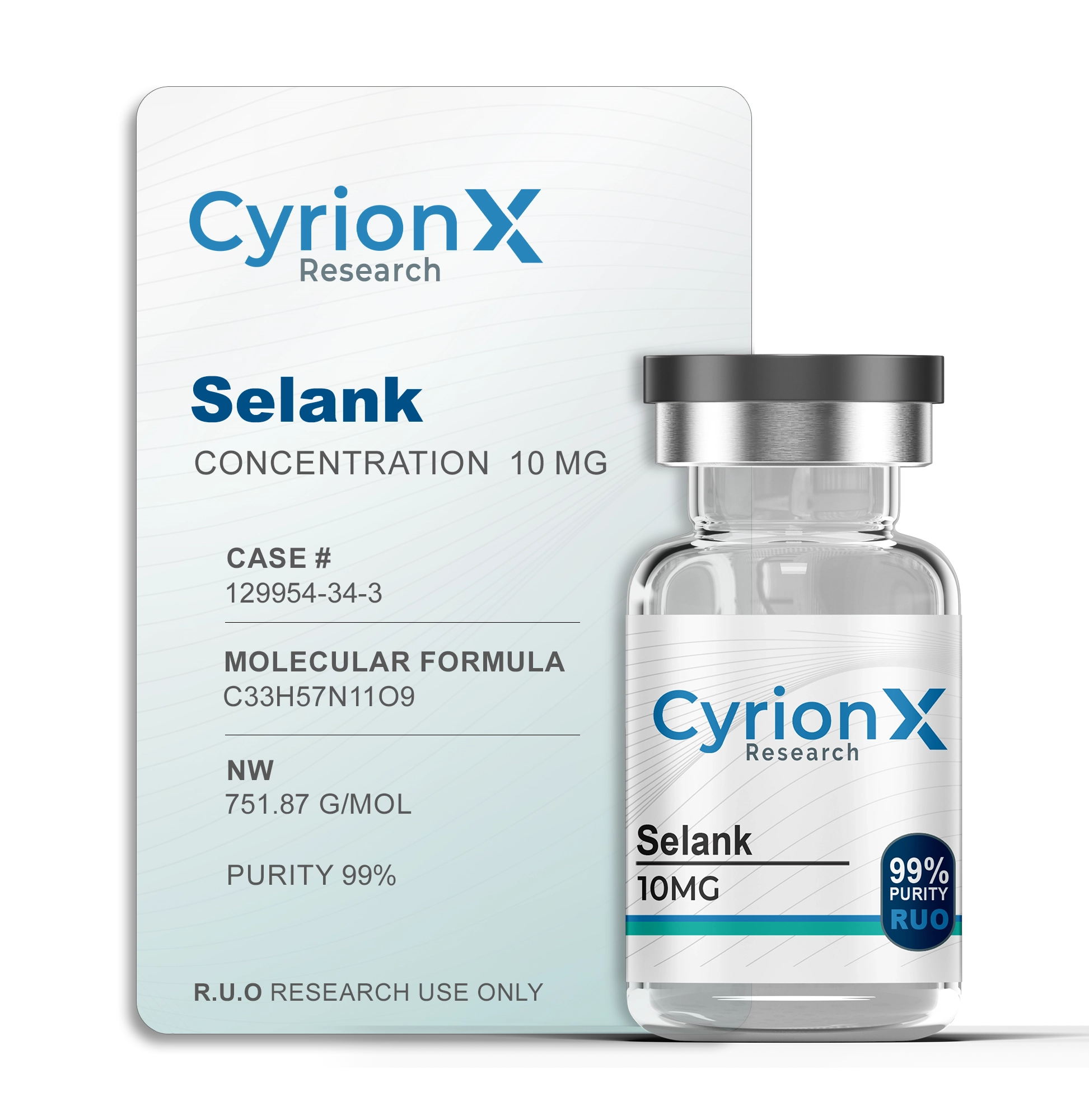
Selank
(Synthetic Heptapeptide – Anxiolytic & Cognitive Modulator)
Selank is a synthetic heptapeptide analog derived from the endogenous peptide Tuftsin, engineered to modulate neuropeptide activity within the central nervous system. Developed as a more stable and longer-acting variant of tuftsin, Selank has been studied in preclinical and early clinical research for its potential neuromodulatory, anxiolytic, and cognitive regulatory properties.
Research indicates that Selank may influence pathways involved in mood regulation, stress response, and cognitive processing. Experimental studies have explored its interactions with neurotransmitter systems and immune regulatory mechanisms associated with neurochemical balance.
Mechanism of Action
(Based on Preclinical and Clinical Research)
Regulation of monoamine neurotransmitters:
Research suggests Selank may influence levels of neurotransmitters such as Serotonin, dopamine, and norepinephrine within the central nervous system.
GABAergic modulation:
Experimental models indicate indirect interaction with the GABA system, contributing to anxiolytic signaling without significant sedative effects.
Tuftsin receptor interaction:
Derived from tuftsin, Selank may interact with immune-related receptors involved in regulation of immune homeostasis.
Neurotrophic factor influence:
Research has explored potential increases in Brain-Derived Neurotrophic Factor (BDNF), supporting neuronal plasticity and cognitive processes.
Stress-response regulation:
Experimental models demonstrate normalization of behavioral responses to stress and reduction of anxiety-associated markers.
Potential Research Applications
(Based on Preclinical and Investigational Studies)
Investigation of anxiety-related neurochemical pathways
Research on cognitive processing and memory regulation
Study of neuropeptide signaling in the central nervous system
Experimental models of stress response and emotional regulation
Investigation of immune–neurotransmitter interactions
For Research Use Only. Not for Human Consumption.
This compound is not approved by the FDA or any regulatory authority and is intended solely for laboratory research purposes.
Reviews
There are no reviews yet.